
Summarize and analyze this article with:
For the current engineering recruitment position, the candidate looks right. Strong systems engineering experience, relevant projects, and compensation expectations within range. Then the recruiter reaches the client’s security requirements: a specific eligibility level, additional program access conditions, and on-site work several states away.
The candidate’s technical background still fits. The assignment does not.
Meanwhile, another engineer is interested but needs relocation support. A third has relevant clearance history, but the client’s security team must confirm whether it satisfies the requirement. The shortlist grows, yet the start date remains uncertain.
For U.S. engineering staffing firms, speed comes from resolving these constraints earlier without rushing candidates through screening. Reducing time-to-fill requires clearer job intake, proactive talent mapping, consistent engagement, and a firm boundary between recruitment support and authorized security verification.
Why Security-Cleared Engineering Roles Take Longer to Fill
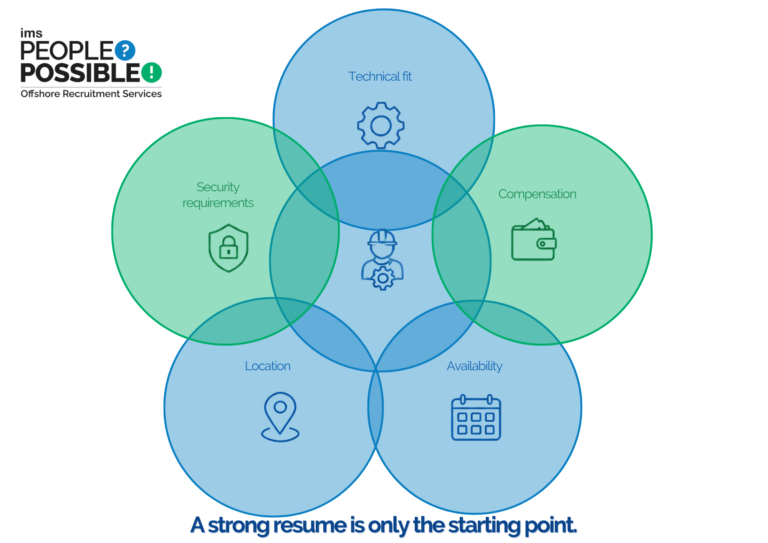
These searches combine several requirements: technical expertise, security eligibility, program-specific access, location, compensation, and availability.
The wider engineering market adds competition. The Bureau of Labor Statistics projects approximately 174,800 annual openings across architecture and engineering occupations between 2025 and 2035. Aerospace engineering alone is projected to grow 8%, with approximately 3,800 openings annually. These figures cover the broader occupations, not specifically cleared positions, but illustrate the competing demand for engineering talent.
Clearance requirements narrow that market further. Crucially, eligibility is not the same as authorization to access every classified program. The Defense Counterintelligence and Security Agency explains that access requires appropriate eligibility and a legitimate need-to-know. Additional conditions may apply to Sensitive Compartmented Information or Special Access Programs.
That distinction matters when building shortlists. A resume mentioning “Top Secret” does not establish that the candidate can immediately support a particular assignment.
Staffing firms should also avoid treating “clearance expired” as a complete diagnosis. Route questions about eligibility, access history, reciprocity, and additional processing to the client’s authorized security personnel.
Reducing Time-to-fill for Security Cleared Engineering Positions
1. Resolve Security Requirements Before Sourcing
A vague requisition creates avoidable sourcing work.
Before launching a search, align with the hiring manager and facility security officer (FSO), or other authorized security representative. Separate the engineering requirements from the security and deployment conditions.
Document:
- Engineering discipline, tools, domain experience, and essential qualifications.
- Required eligibility level and any additional access conditions.
- Whether sponsorship or interim eligibility can be considered.
- Who verifies security status and approves assignment readiness.
- Worksite, on-site expectations, travel, and relocation support.
- Compensation range, interview stages, and anticipated start dependencies.
Individuals cannot apply for a personnel security clearance independently. A cleared employer initiates processing when the position requires it; DCSA also describes conditions under which an accepted written employment commitment can support processing.
Consequently, “must already meet the requirement” and “client can sponsor” describe different searches. Establish which applies before recruiters exclude potentially suitable engineers or present candidates who cannot meet the timeline.
If interim eligibility is an option, treat it as a possible pathway and not as a promised outcome. DCSA grants interim eligibility only when the relevant criteria are satisfied.
2. Build Pipelines Around Engineering Skills and Deployment Constraints
A generic engineering database will not reliably support cleared hiring.
Create talent communities around recurring disciplines such as systems engineering, embedded software, electrical engineering, mechanical design, avionics, and test engineering. Add the practical variables that influence acceptance and availability.
Useful fields include:
- Technical specialization and relevant industry experience.
- Preferred locations and willingness to relocate.
- On-site availability and travel preferences.
- Compensation expectations and notice period.
- Date of the latest candidate conversation.
- Candidate-reported security information, clearly distinguished from authorized verification.
Keep restricted security records outside general sourcing workflows. Collect only approved information, and apply access controls appropriate to the client’s requirements.
This approach helps recruiters identify whether a search is constrained by skills, geography, compensation, or security processing. It also makes pipeline refreshes more targeted.
Our clients realise upto 50% Cost
Savings when they partner with us
An agreed scope can help staffing firms maintain approved talent records and identify potential candidates while keeping security verification with authorized personnel.
3. Map the Market Before Promising a Shortlist
Talent pool mapping should inform the client conversation, not simply produce a list of names.
Assess the availability of relevant engineers in the target region, adjacent industries, and potential relocation markets. Compare the requirement against candidate feedback about pay, commuting, project duration, and on-site work.
Present trade-offs clearly. If the local market is narrow, the client may need to reconsider relocation support, compensation, adjacent technical experience, or interview availability. Security requirements themselves should only change through the appropriate authorized process.
Use this research to agree on a realistic sourcing plan. Do not promise the same turnaround for an immediately available local candidate and a relocation-dependent engineer requiring additional security review.
For a broader context, specialized skills, clearance requirements, and candidate availability can restrict hard-to-fill engineering roles search.
4. Keep Candidates Engaged Without Requesting Sensitive Details
Candidate engagement should make the opportunity clearer without exposing protected information.
Share approved details about responsibilities, engineering challenges, work arrangements, compensation, and the interview process. Explain which questions require a conversation with an authorized client representative.
Do not ask candidates to prove their experience by discussing classified projects, restricted technical details, or security documentation through ordinary recruitment channels.
Keep communication predictable:
- Confirm interest before submission.
- Explain the next step and its owner.
- Provide updates even when a decision is pending.
- Reconfirm relocation, availability, and compensation before the offer stage.
- Continue engagement between acceptance and the first day.
Engineering talent nurturing should also extend beyond live vacancies. Periodic, permission-based conversations about career goals, location preferences, and availability can make future searches more responsive without repeatedly restarting relationships.
5. Use Offshore Recruitment Support Within Explicit Boundaries
Offshore support can expand recruitment capacity, but it cannot replace the client’s security function or accelerate government adjudication.
Appropriate activities may include public-source market research, approved candidate outreach, non-sensitive resume screening, pipeline maintenance, interview coordination, and ATS updates. Each activity should be reviewed against contractual restrictions, information sensitivity, and access permissions.
“Unclassified” does not automatically mean information is suitable for unrestricted offshore access. Export-control obligations can apply to technical information. The Bureau of Industry and Security explains that controlled technology can be released through oral or written exchanges with foreign persons, including exchanges abroad. Have the client’s security and export-compliance teams approve the information and systems accessible to offshore recruiters.
Do not provide classified information, clearance-system access, controlled technical material, or restricted candidate records as part of routine offshore sourcing.
Our clients realise upto 50% Cost
Savings when they partner with us
Dedicated recruiters or an RPO arrangement should operate only within approved workflows, with documented escalation to onshore recruitment and security owners.
6. Measure the Delays Your Team Can Actually Influence
A single time-to-fill figure can conceal different problems.
Define whether the clock ends at accepted offer or actual start, then track stages separately: intake-to-first-qualified-submission, submission-to-interview, interview-to-offer, and offer-to-start.
Distinguish recruiter-controlled delays from client decisions and external security processing. Use approved high-level status categories rather than storing sensitive adjudication details in a general ATS.
Review speed alongside quality: shortlist acceptance, interview conversion, offer acceptance, candidate withdrawals, and successful starts.
This prevents recruiters from being rewarded for fast submissions that cannot progress and helps clients see where faster feedback or clearer requirements would make a difference.
Build a More Responsive Engineering Recruitment Operation With IMS People Possible
Security-cleared engineering recruitment becomes more manageable when staffing firms develop candidate relationships before demand arrives, clarify requirements early, and give every handoff a clear owner.
IMS People Possible can support the recruitment work around that process through engineering talent sourcing, market mapping, candidate pipeline building, ATS management, approved screening, and engagement. Start with one recurring engineering discipline or account, define the information boundary, and establish measures for shortlist quality and turnaround.
Connect with IMS People Possible to scope offshore recruitment support around your engineering desk’s capacity needs and your clients’ security requirements. The objective is a better-prepared recruitment operation not a shortcut around clearance.