
Summarize and analyze this article with:
The Structural Shift Behind Temporary and Contract Hiring Growth
One of the most important developments across the staffing market is not simply the growth of temporary and contract recruitment.
It is what that growth is beginning to change underneath recruitment operating models themselves.
Flexible resourcing is becoming structurally more important across the Irish market.
In 2025, temporary and contract recruitment accounted for 48% of agency Net Fee Income, while permanent recruitment represented less than half at 44%.
That shift is commercially significant.
Across healthcare, life sciences, construction, engineering, logistics and specialist technology functions, organisations continue hiring actively. Yet many employers are becoming increasingly cautious about permanent workforce expansion within uncertain economic conditions.
This is accelerating the strategic importance of workforce flexibility.
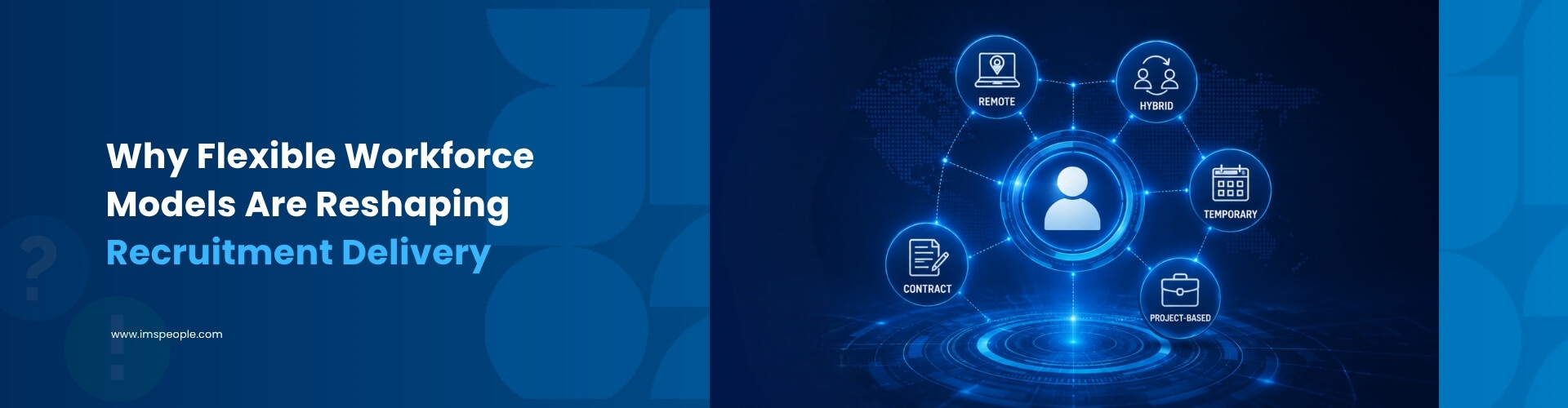
Temporary and contract hiring are no longer operating solely as short-term staffing solutions.
Increasingly, they are becoming embedded into broader workforce strategies focused on:
- Specialist Capability Access
- Operational Adaptability
- Commercial Flexibility
- Project-Based Workforce Scaling
- Organisational Resilience
This reflects a wider shift in employer behaviour.
Organisations remain under pressure to sustain growth and productivity while simultaneously navigating:
- Rising Employment Costs
- Workforce Shortages
- Project Volatility
- Compliance Complexity
- Increasing Pressure On Operational Efficiency
Flexible workforce structures provide something increasingly valuable within this environment: access to capability without introducing unnecessary rigidity into workforce models.
This shift carries significant implications for staffing businesses themselves.
Flexible workforce environments increase:
- Fulfilment Intensity
- Onboarding Coordination
- Contractor Management Complexity
- Redeployment Pressure
- Compliance Dependency
- Speed-To-Fill Expectations Simultaneously
As temporary and contract hiring become more commercially important, the operational burden sitting behind recruitment delivery grows disproportionately.
Consultants are often spending more time coordinating process, availability, onboarding and fulfilment continuity under pressure.
This changes the nature of scalability inside staffing businesses.
Historically, many recruitment firms approached growth primarily through commercial expansion:
- More Recruiters
- More Desks
- Broader Market Coverage
- Larger Client Portfolios
The market is increasingly rewarding something different.
Operational scalability.
How effectively workflows connect across teams.
How consistently fulfilment performs under pressure.
How efficiently recruitment infrastructure supports contractor intensity and workforce coordination.
How intelligently delivery capability scales as workforce conditions become more selective and operationally demanding.
This evolution is becoming commercially significant because flexible workforce models are reshaping more than hiring behaviour.
They are reshaping the economics of recruitment delivery itself.
The firms likely to strengthen market position over the coming years may not simply be those operating with the largest scale.
Increasingly, advantage may favour organisations capable of combining:
- Specialist Capability Access
- Recruiter Productivity
- Fulfilment Responsiveness
- Workflow Intelligence
- Scalable Operational Capability Behind Delivery
Because as flexible workforce models continue evolving, growth and scalability are no longer the same thing.