

Summarize and analyze this article with:
The global recruitment process outsourcing (RPO) industry is undergoing a profound transformation. Amid economic uncertainty and rising talent complexity, staffing leaders are re-evaluating their approach to human resource outsourcing. The latest insights from the RPO Global Landscape Summary 2025 reveal key developments that are redefining the way organizations source, attract, and hire talent.
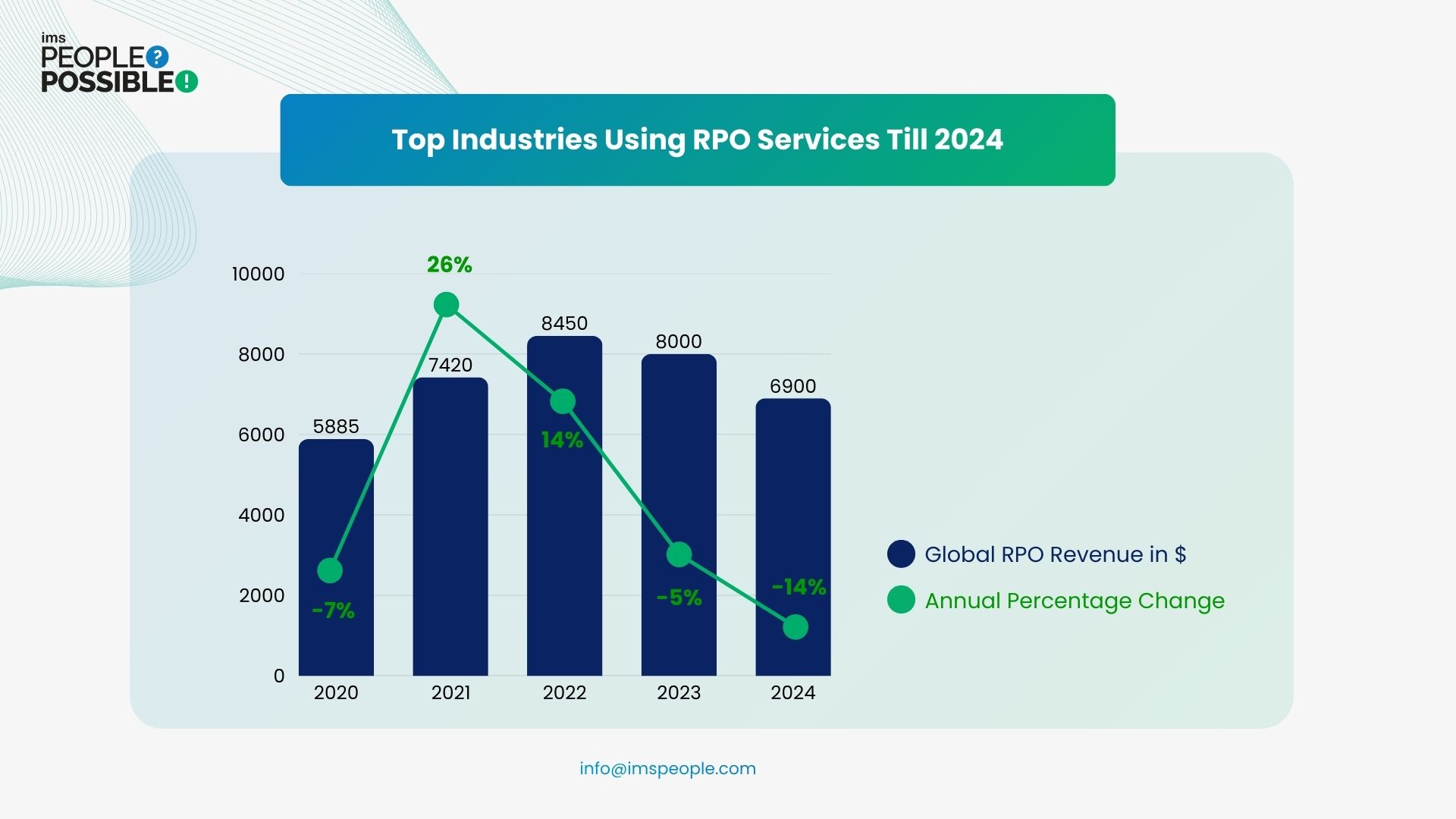
The RPO market was valued at USD 6.9 billion in 2024, down 14% year over year. Yet this contraction masks a strategic shift. As organizations seek resilience, flexibility, and digital readiness in talent acquisition, RPO solutions are evolving to meet a broader set of enterprise needs.
RPO Market: Stabilization After a Decline
The 2024 decline followed a 5% drop in 2023, driven by geopolitical instability, macroeconomic headwinds, and prolonged deal cycles. Despite this, the RPO market is forecast to stabilize in 2025, with expectations of low single-digit growth. The Americas remain the largest regional contributor, accounting for 50% of total global spend, followed by EMEA (30%) and APAC (20%).
Organizations are now increasingly turning to recruitment outsourcing companies to build scalable, agile hiring models. These models allow rapid workforce adjustments in volatile conditions, where traditional in-house recruitment often lacks the responsiveness or infrastructure to adapt quickly.
Strategic Shifts Shaping RPO Services
RPO services are becoming increasingly integral to strategic workforce planning. In 2025, 74% of all contracts were structured as ongoing RPO engagements, rather than project-based models. These long-term partnerships provide not only sourcing and selection but also employer branding, talent pipelining, and DE&I consulting.
As talent scarcity intensifies, particularly specialized digital and professional roles, RPO companies are adapting with advanced sourcing strategies. Clients are increasingly looking to secure in-demand skills through a mix of “buy, borrow, or build” approaches. RPO providers now act as strategic partners, advising on how to close skills gaps using internal mobility, contingent staffing, and reskilling.
The Technology Arms Race in RPO
Technology now defines competitiveness in the RPO industry. Providers are investing in AI-powered recruitment platforms, automation tools, and analytics dashboards to enhance both efficiency and candidate quality.
Generative AI has become a foundational capability—used for job description creation, resume parsing, and automated candidate engagement. Providers are also deploying agentic AI for autonomous task execution, such as interview scheduling and candidate screening.
Across the landscape, over 189 distinct talent acquisition technologies are in active use. These range from applicant tracking systems (ATS) like iCIMS, SAP SuccessFactors, and Workday to sourcing automation platforms and recruitment CRMs. The ability of RPO companies to design and manage integrated tech stacks has become a key differentiator.
Talent Acquisition Models Are Evolving
Recruitment outsourcing companies are shifting from transactional hiring to strategic talent consulting. The market is seeing a clear pivot to skills-based hiring, where job roles are defined by competencies rather than formal credentials. This shift supports greater workforce diversity and allows access to broader candidate pools.
RPO solutions are increasingly responsible for guiding clients through this transition—defining skills taxonomies, deploying skill assessments, and delivering targeted upskilling programs. Candidate experience is also a critical area of focus. Firms are streamlining application processes, using automated tools for interview scheduling, and optimizing employer branding through content marketing and social media.
Candidates are demanding transparency, long-term career development, and alignment with employer values. As a result, RPO providers are enhancing their capabilities in candidate sentiment analysis, personalized engagement, and digital onboarding.
Service Models, Delivery, and Pricing Trends
In 2025, 71% of RPO clients use end-to-end services covering everything from sourcing to onboarding and even exit interviews. This full-scope model reflects a growing demand for RPO solutions that go beyond recruitment to support retention, analytics, and strategic workforce insights.
Offsite delivery dominates, with 87% of RPO staff operating remotely. Notably, 60% of delivery teams are based in nearshore or offshore locations—highlighting the global nature of talent acquisition outsourcing and the cost-efficiency advantages it brings.
In terms of pricing, the most common model is a hybrid of fixed monthly fees and cost-per-hire. This approach ensures flexibility for clients while enabling RPO providers to maintain service quality despite fluctuating hiring volumes.
Sector Focus and Hiring Types
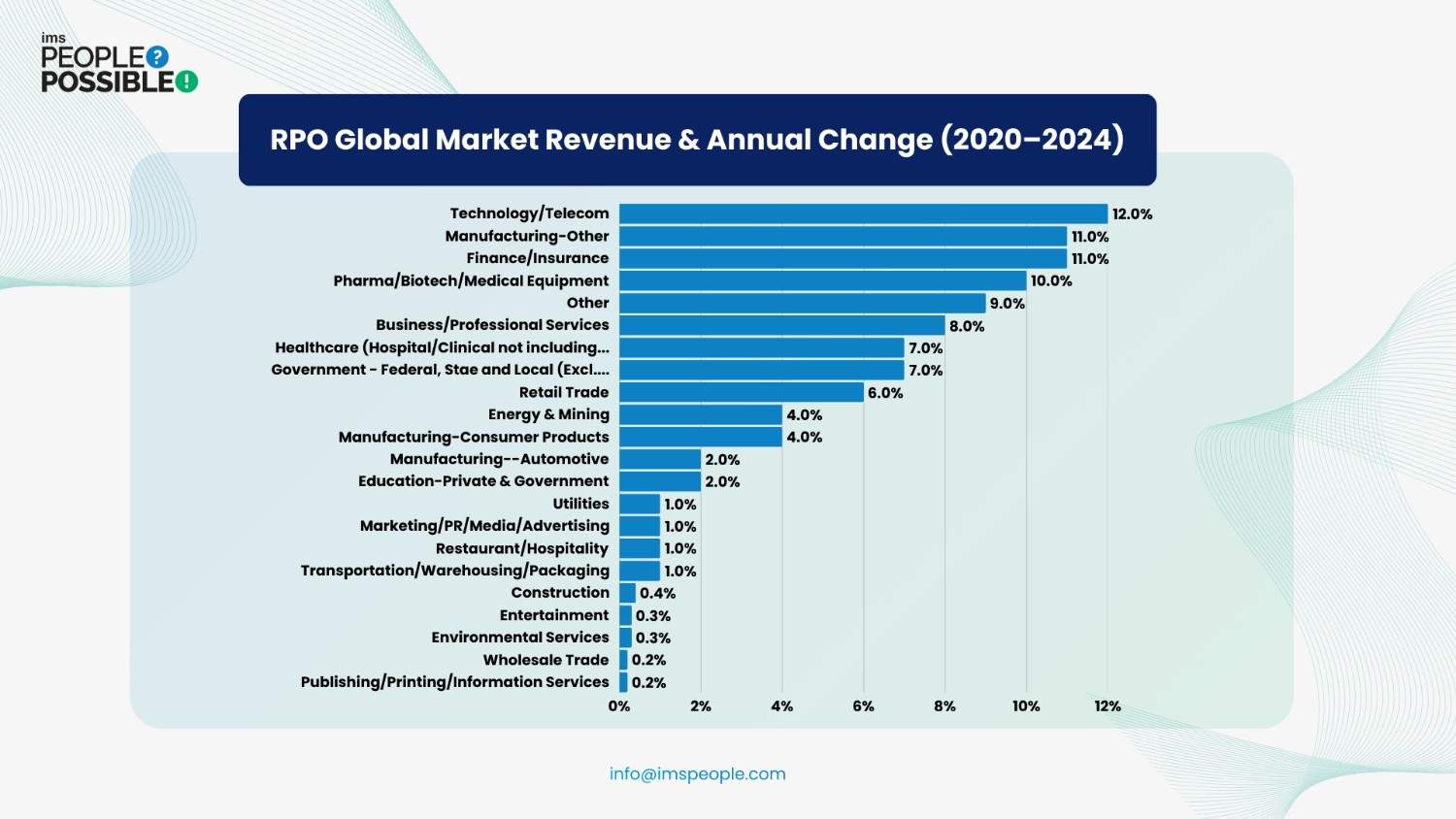
RPO services are deeply embedded across multiple industry verticals. The highest adoption comes from Technology/Telecom, Financial Services, Healthcare, and Manufacturing. From an occupational perspective, the largest hiring volumes are in IT, Industrial, Finance & Accounting, and Healthcare roles.
RPO providers cater to all hiring types, with experienced hires making up 54% of reported placements. However, providers are increasingly managing graduate, intern, and apprenticeship campaigns—especially for enterprise clients looking to future-proof their workforce.
Market Consolidation Through M&A
Mergers and acquisitions are reshaping the competitive landscape. Notable deals in 2024 included Kelly’s acquisition of Motion Recruitment Partners and Korn Ferry’s acquisition of Trilogy International. These moves aim to expand geographic reach, strengthen sector expertise, and enhance technology portfolios.
Buyers are showing strong interest in RPO firms with proprietary tech, domain specialization, or consultative capabilities—highlighting the premium placed on innovation and differentiation in the current market.
Outlook: From Vendor to Strategic Partner
The RPO market is evolving rapidly. Clients now expect more than just sourcing support—they require advisory services, workforce insights, and technology expertise. RPO providers that can combine recruitment excellence with strategic consulting will define the next phase of growth.
Key differentiators for 2025 and beyond:
- Integrated AI and automation capabilities
- Expertise in skills-based hiring and workforce planning
- Scalable global delivery infrastructure
- Consultative services across DE&I, employer branding, and talent analytics
Why Staffing Leaders Choose IMS People Possible
IMS People Possible brings an unmatched combination of recruitment domain expertise, global offshore infrastructure, and advanced digital capabilities. With a robust technology ecosystem, consultative service model, and deep specialization in talent acquisition outsourcing, IMS People Possible is uniquely positioned to help staffing organizations scale sustainably and deliver outcomes with confidence.
As RPO solutions continue to evolve, staffing leaders need a partner equipped for tomorrow’s workforce challenges. IMS People Possible delivers the agility, insight, and innovation required to succeed in 2025 and beyond.